

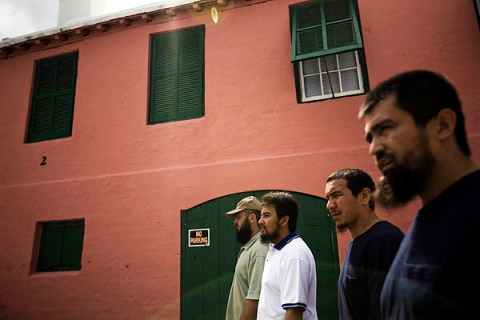
Four Uighurs, recently freed from captivity at Guantanamo Bay, tour the historic district of St. George in Bermuda on Sun., Jun. 14, 2009.
Twenty-two of the detainees in Guantanamo were ethnic Uighurs, a Turkic Muslim minority in China, mostly living in the far western region of Xinjiang. The majority of them were seized in remote borderland marches in nearby Afghanistan and Pakistan, under suspicion of serving the East Turkestan Islamic Movement, a Uighur-separatist militant group that supposedly has ties to larger terror networks, or other Central Asia-based jihadist outfits. The detained Uighurs, though, claim they were fleeing religious and ethnic persecution. In any event, most of them were found to be “non-enemy” combatants and 17 have so far been released and given residence in Albania and the islands of Bermuda and Palau — curious destinations for a land-locked people, long the custodians of the old Silk Road. U.S. officials recognize that, should these Uighurs now be forcibly returned to China, they face arrest, torture and even the threat of execution.